
Knife Care · Maintenance GuidE
How to Keep Kitchen Knives Sharp—and Actually Maintain
A precision sharpening system isn't just about the first edge. It's about making upkeep effortless enough that sharp knives become the default.
When maintenance becomes effortless, your knives stay sharp. When your knives stay sharp, cooking becomes more enjoyable. That's the real value of a precision sharpening system—not just the initial edge, but the ability to maintain that edge with minimal effort.
Key Takeaways
- →Sharp knives should easily slice tomatoes, cut proteins cleanly, enable tearless onion cutting, and pass completely through fibrous vegetables in one motion.
- →Finishing at 1000-grit diamond makes maintenance faster and easier than high-grit finishes—while still delivering excellent cutting performance.
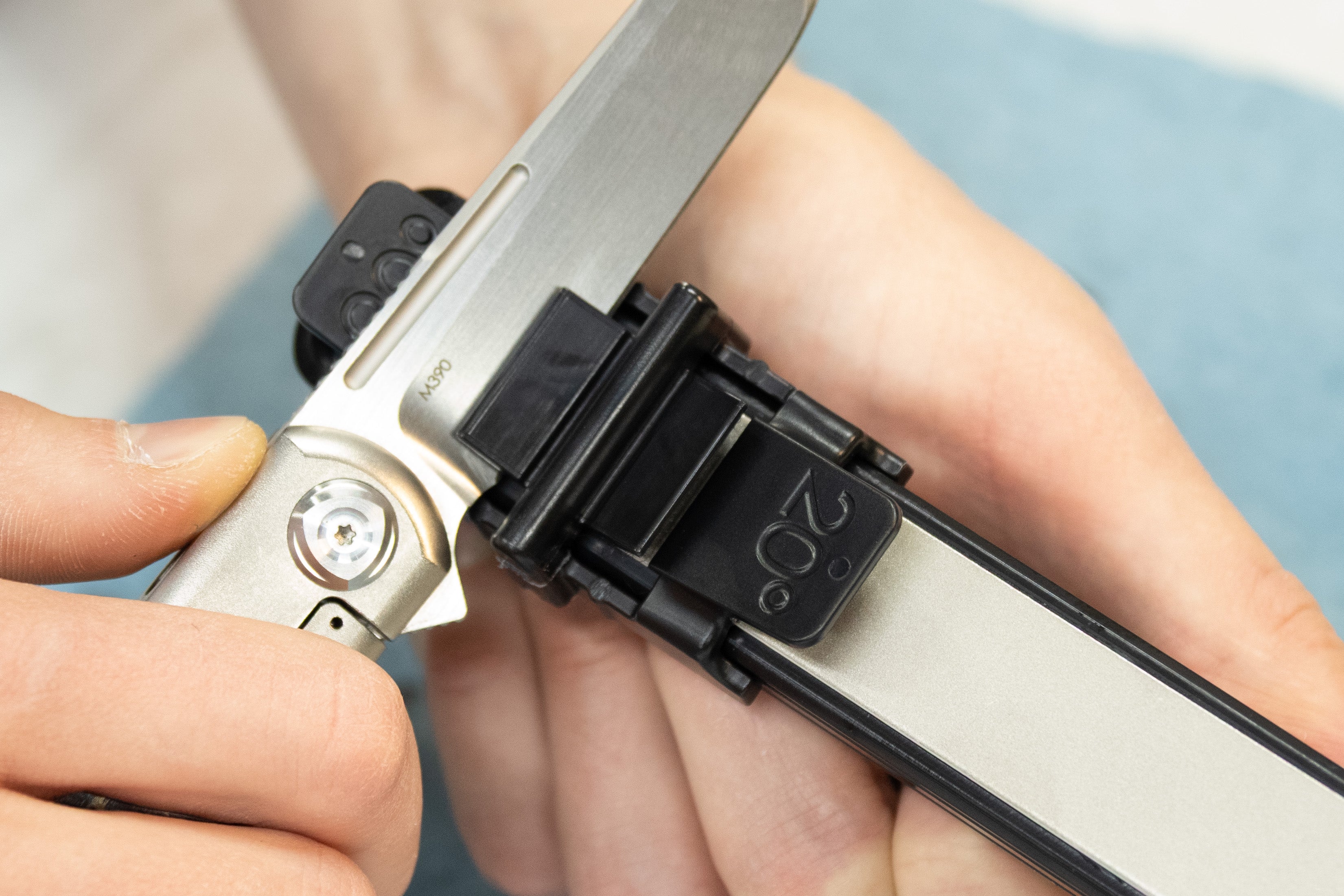
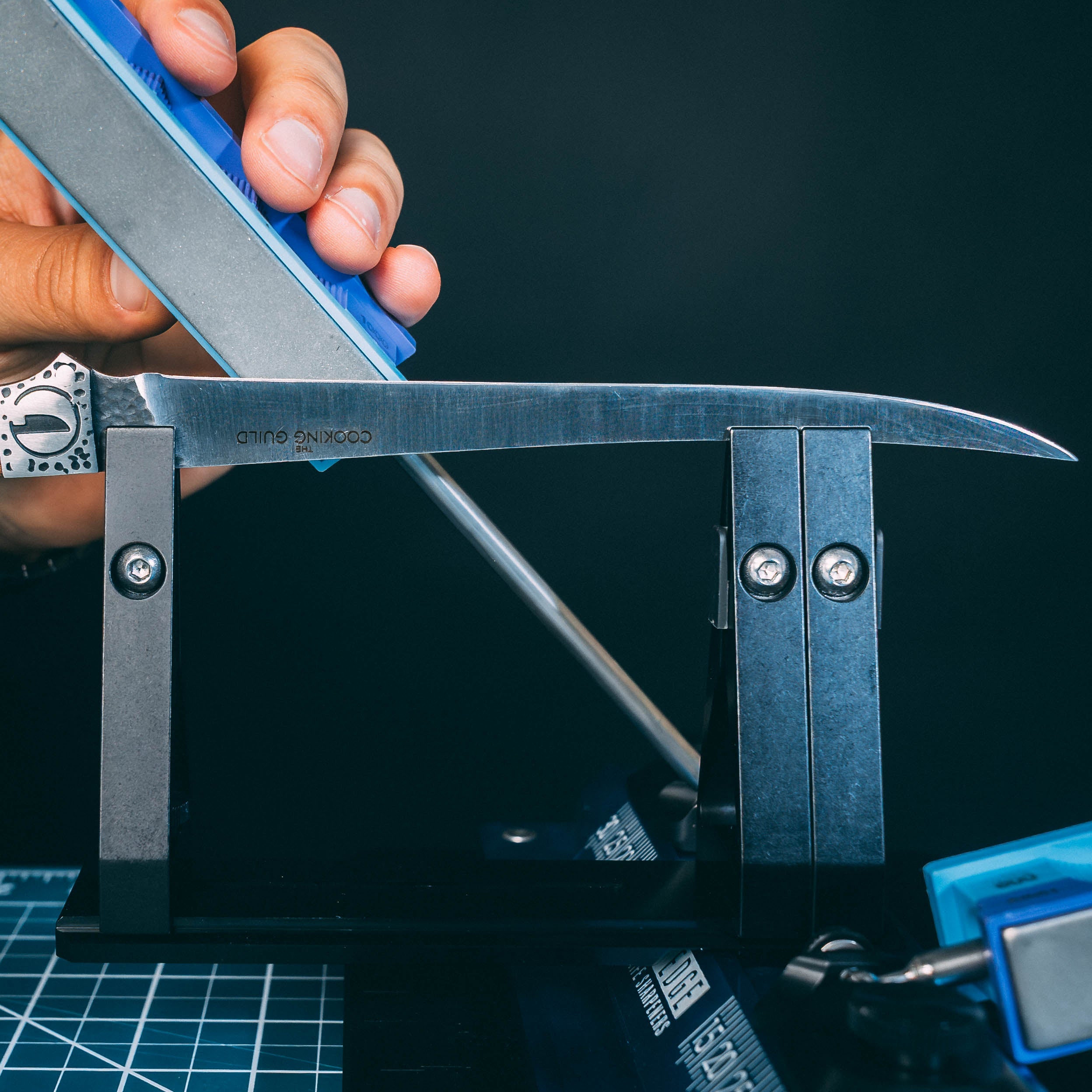
- →Set proper edge geometry on a bench sharpener (15° for hard steels, 20° for standard stainless), then maintain with a handheld guided sharpener.
- →Maintenance takes approximately 5 strokes per side every 2 weeks. Full reprofiling is only needed once per year—or when touch-ups require 20+ strokes.
- →Cuts that veer sideways indicate uneven bevels. Fix by equalizing bevel sizes and using alternating strokes.
- →Edges that dull quickly stem from work-hardening (use lighter pressure) or overly acute geometry (increase angle by 2–5 degrees).
Sharpening & Maintenance FAQ
How do I know when my kitchen knife needs sharpening?
A sharp knife should glide through a ripe tomato without pressure, cut proteins cleanly without tearing, and slice fibrous vegetables like celery or leeks in a single motion. If your knife skids, crushes, or requires extra force on any of these tasks, it's time for a maintenance pass—not necessarily a full resharpen.
What grit should I use to finish a kitchen knife edge?
For most home cooks, finishing at 1000-grit diamond strikes the best balance. A 1000-grit edge is slightly more "toothy" than a polished finish, which makes it more forgiving in regular use and dramatically faster to refresh. Higher-grit edges (3000+) are sharper initially, but require more careful maintenance to restore.
What angle should I sharpen my kitchen knife at?
 The correct sharpening angle depends on your steel. Use 15° per side for hard Japanese steels (60+ HRC), which hold a finer edge. Use 20° per side for standard stainless knives, which are softer and need a slightly more robust geometry to avoid rolling. Set this geometry once on a bench sharpener; your guided handheld tool locks it in for all future maintenance.
How often should I sharpen kitchen knives?
With a guided maintenance sharpener, about 5 strokes per side every two weeks keeps most knives performing like new. Reserve a full bench-sharpener session for once per year—or whenever light touch-ups require more than 20 strokes to restore the edge. Overworking an edge accelerates wear; consistency is more valuable than intensity.
Why does my knife cut sideways instead of straight?
A knife that tracks sideways has uneven bevels—one side of the edge is higher than the other, pushing the blade off-center as it cuts. Fix it by equalizing bevel sizes: spend extra strokes on the dominant side until both bevels match, then switch to alternating strokes to maintain symmetry.
Why does my knife go dull so quickly after sharpening?
Rapid dulling usually has one of two causes. First, work-hardening: applying too much pressure while sharpening stresses the steel at the apex, causing it to collapse sooner. Use lighter, consistent strokes. Second, overly acute geometry: if the angle is too shallow for your steel's hardness, the thin edge simply can't hold up. Try increasing your angle by 2–5 degrees and reassess over a few weeks.
Sharp knives transform cooking from a chore into a pleasure. With the right maintenance system—convenient tools, appropriate finish levels, and clear performance benchmarks—keeping your kitchen knives razor-sharp becomes second nature.
The few minutes invested in regular maintenance pay dividends in safer, faster, more enjoyable meal preparation. When the system is dialed in, you'll stop thinking about your knives entirely—and simply enjoy cutting with them.